- 877.942.5613
- info@paveconnect.com
- We Never Close 24/7/365
- 877-942-5613
- info@paveconnect.com



How to Tell What Your Parking Lot Needs: The Complete Maintenance Plan Guide
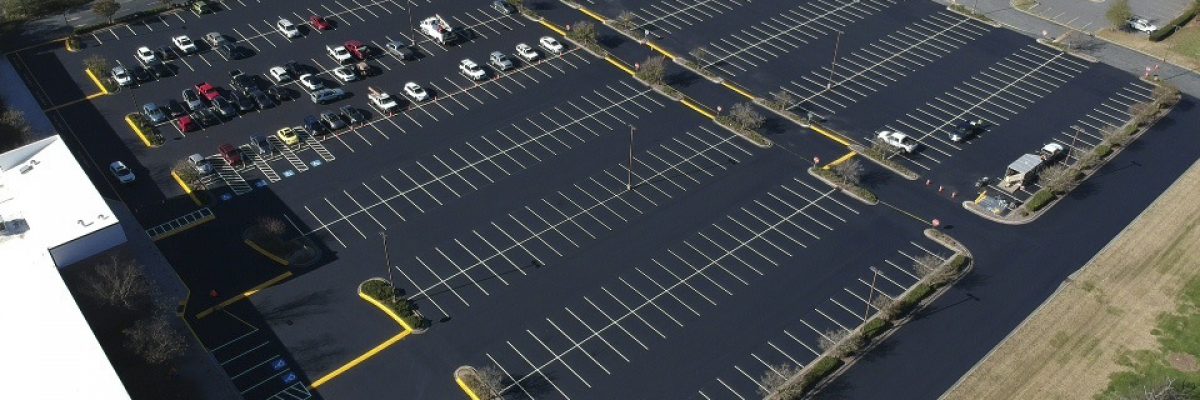
Starting the day your brand-new parking lot is completed, it slowly begins to deteriorate; however, this deterioration can be combated with routine preventative maintenance. To better understand what kind of maintenance your parking lot needs, you first need to know its condition. Creating an effective parking lot maintenance plan starts with understanding your pavement’s current condition and specific needs.
Property managers across the USA face similar challenges when determining whether their parking lot requires routine maintenance, major asphalt repairs, or complete parking lot repaving. Discover how to break down your project’s repair needs into manageable sections, helping you develop a parking lot maintenance schedule that protects your investment and extends pavement lifespan.
Quick Assessment: How to Tell What Your Parking Lot Needs
Visual Condition Checklist
Start your parking lot assessment with a systematic visual inspection. Walk the entire surface during daylight hours, looking for specific indicators that reveal your pavement’s condition and maintenance needs.
Linear cracks running parallel to traffic flow indicate normal aging, while random cracking suggests deeper structural issues. Measure crack widths using a ruler – cracks under one-quarter inch need sealing, while wider cracks require professional evaluation for potential parking lot repaving or expert crack sealing repairs.
Fresh asphalt appears deep black with uniform texture. Gray or brown coloring indicates UV damage and oxidation, signaling the need for sealcoating in your parking lot maintenance plan. Rough, sandy texture shows aggregate separation requiring immediate attention.
Standing water after rain reveals drainage problems that accelerate pavement deterioration. Note areas where water pools for more than 24 hours, as these locations need grading corrections or drainage improvements in your parking lot maintenance schedule.
Load-Bearing Assessment
Heavy traffic areas show accelerated wear through rutting, cracking, and surface deformation. Document which sections handle the most vehicle traffic to prioritize maintenance activities.
Areas where delivery trucks or heavy equipment operate require more frequent maintenance than passenger car zones. Include these high-stress locations in your parking garage maintenance schedule for commercial properties.
Parking Lot Lifecycle Stages and Maintenance Requirements
Stage 1: Excellent Condition (Years 1-5)
What to Look For
Your parking lot maintains its original appearance with minimal surface imperfections. Minor hairline cracks may appear from thermal expansion, and slight color variations develop from UV exposure.
Parking Lot Maintenance Plan Actions
- Annual professional inspections
- Immediate crack sealing for any cracks over 1/8 inch
- Sealcoating every 2-3 years
- Regular cleaning and debris removal
- Line striping touch-ups as needed

Maintenance Schedule Priority
Focus on preventative measures during this stage. Your parking lot maintenance schedule should emphasize protection rather than repair, maximizing the lifespan of your initial investment.
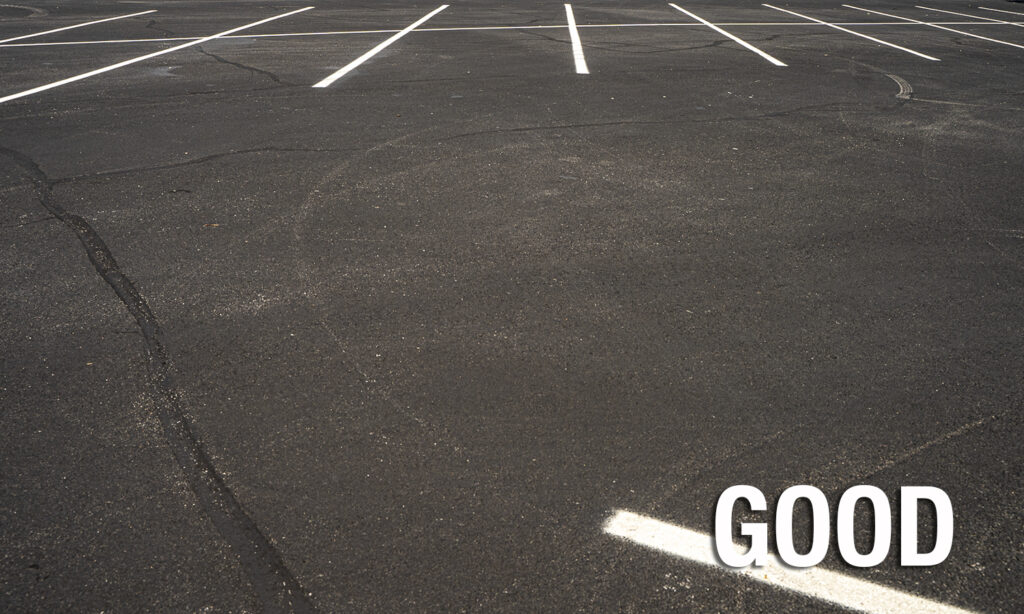
Stage 2: Good Condition (Years 5-10)
What to Look For
Noticeable surface cracking follows traffic patterns, and UV degradation accelerates color fading from black to gray. Small depressions appear in high-traffic areas, and oil stains become more permanent.
Parking Lot Maintenance Plan Actions
- Bi-annual crack sealing programs
- Sealcoating every 18-24 months
- Pothole patching as needed
- Drainage system cleaning
- Complete line striping refresh
Maintenance Schedule Priority
This stage requires active maintenance intervention. Your parking garage maintenance schedule should include regular structural assessments to prevent minor issues from becoming major problems.
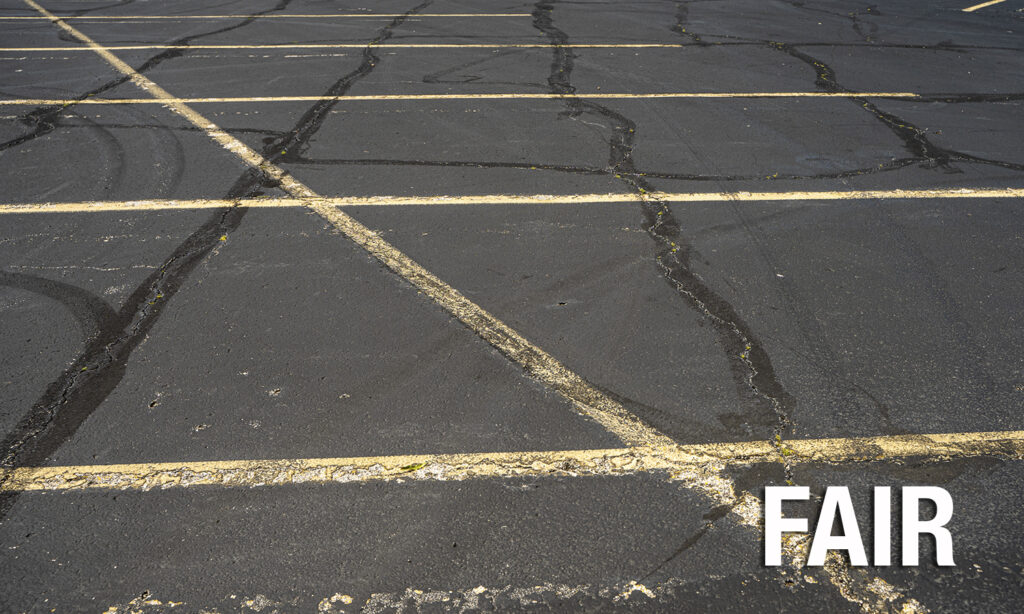
Stage 3: Fair Condition (Years 7-15)
What to Look For
Larger structural cracks develop, often several feet long, with vertical displacement. Pothole formation becomes common as water infiltration weakens the subgrade. Edge deterioration appears where asphalt meets curbs.
Parking Lot Maintenance Plan Actions
- Extensive crack filling and sealing
- Pothole repair programs
- Overlay or resurfacing evaluation
- Drainage system upgrades
- ADA compliance assessments
Maintenance Schedule Priority
Consider parking lot repaving options during this stage. Your maintenance plan should focus on structural interventions that extend pavement life and delay full reconstruction.
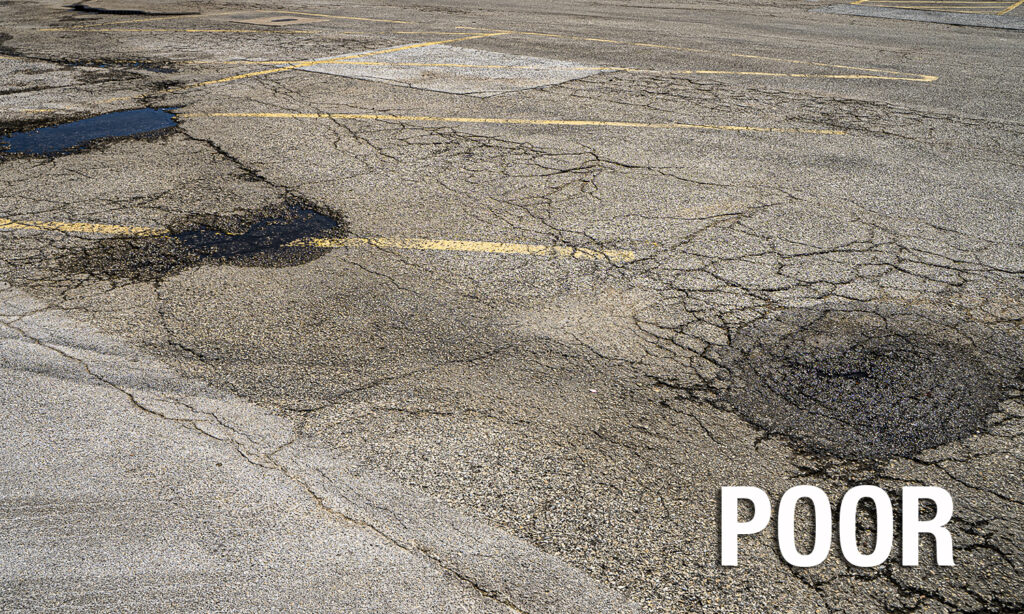
Stage 4: Poor Condition (Years 12-25)
What to Look For
Widespread alligator cracking creates interconnected fissures, allowing deep water penetration. Multiple potholes require constant patching, and the surface becomes uneven enough to pose safety concerns.
Parking Lot Maintenance Plan Actions
- Complete reconstruction evaluation
- Safety hazard mitigation
- Temporary patching for liability protection
- Budget planning for replacement
- Alternative surface material consideration
Maintenance Schedule Priority
At this stage, parking lot repaving or complete reconstruction typically provides the most economical long-term solution for your property.
Creating Your Parking Lot Maintenance Schedule
Annual Planning Calendar
Spring (March-May)
Post-winter assessment and crack sealing programs work best during moderate temperatures. Schedule professional inspections to identify winter damage and plan summer maintenance activities.
Summer (June-August)
Optimal weather for sealcoating applications and major repair projects. Plan parking lot repaving projects during this season for the best material performance and curing conditions.
Fall (September-November)
Final preparations for winter, including drainage cleaning and crack sealing completion. Update your parking garage maintenance schedule based on summer project results.
Winter (December-February)
Focus on snow removal planning and emergency repair identification. Use this time for budget planning and contractor selection for next year’s maintenance activities.
Maintenance Frequency Guidelines
Weekly Tasks
- Debris removal and cleaning
- Safety hazard identification
- Drainage outlet inspection
Monthly Tasks
- Detailed surface inspection
- Line striping condition assessment
- Traffic flow pattern evaluation
Quarterly Tasks
- Professional structural assessment
- Crack measurement and documentation
- Maintenance cost analysis
Annual Tasks
- Complete pavement condition survey
- Budget planning for the following year
- Contractor performance review
Regional Considerations for Parking Lot Maintenance Plan Development
Climate Impact on Maintenance Scheduling
Northern Climates
Freeze-thaw cycles accelerate pavement deterioration, requiring more frequent crack sealing and drainage maintenance. Plan major repairs during warmer months when materials cure properly.
Southern Climates
UV radiation and high temperatures cause rapid aging, making regular sealcoating critical. Hot weather provides longer working seasons for parking lot repaving projects.
Coastal Areas
Salt air increases oxidation rates, requiring adjusted maintenance frequencies and specialized materials resistant to corrosion and moisture penetration.
Traffic Volume Adjustments
High-Traffic Commercial Properties
Shopping centers and office complexes need accelerated maintenance schedules with more frequent inspections and repairs. Consider upgrading to higher-grade materials during parking lot repaving projects.
Medium-Traffic Facilities
Standard maintenance schedules work well for most commercial properties with moderate daily traffic volumes and typical vehicle weights.
Low-Traffic Areas
Residential complexes and low-use facilities can extend maintenance intervals while still maintaining safety and appearance standards.
Cost-Effective Maintenance Strategies
Preventative Maintenance ROI
Early Intervention Benefits
Addressing minor issues immediately prevents exponential repair cost increases. Include rapid response protocols in your parking lot maintenance plan for maximum cost efficiency.
Material Quality Considerations
Professional-grade materials cost more initially but provide superior performance and longevity compared to consumer alternatives available at retail stores.
Timing Optimization
Scheduling multiple maintenance activities together reduces mobilization costs and minimizes business disruption during repair periods.
Budget Planning Methods
Reserve Fund Development
Allocate 2-3% of original construction costs annually for maintenance activities. This approach spreads expenses over time and prevents unexpected financial impact from major repairs.
Lifecycle Cost Analysis
Compare maintenance costs against replacement timing to optimize spending decisions. Factor in liability exposure, lost business, and vehicle damage potential when evaluating repair versus replacement options.
Professional Service Value
Experienced contractors provide warranty protection and liability coverage that protect your business while delivering superior results compared to in-house maintenance attempts.
Professional Assessment and Planning Services
Working with qualified pavement management professionals provides access to specialized knowledge and equipment that most property owners lack. Professional assessments utilize advanced techniques like core sampling and structural analysis to determine actual pavement conditions below the surface.
By understanding what your parking lot needs and implementing an appropriate maintenance schedule, you can maximize your business’s parking lot safety and ensure that you’re saving money by avoiding unnecessary repairs and repaving.
Connect with PaveConnect and get started protecting your parking lot today. Our professionals can spot potential problems before they become expensive emergencies and recommend strategies to help extend your parking lot’s lifecycle.
Looking for a National asphalt paving contractor for your next project?
© 2019 All rights Reserved.
