- 877.942.5613
- info@paveconnect.com
- We Never Close 24/7/365
- 877-942-5613
- info@paveconnect.com



Crack Sealing vs. Sealcoating: What's the Difference?
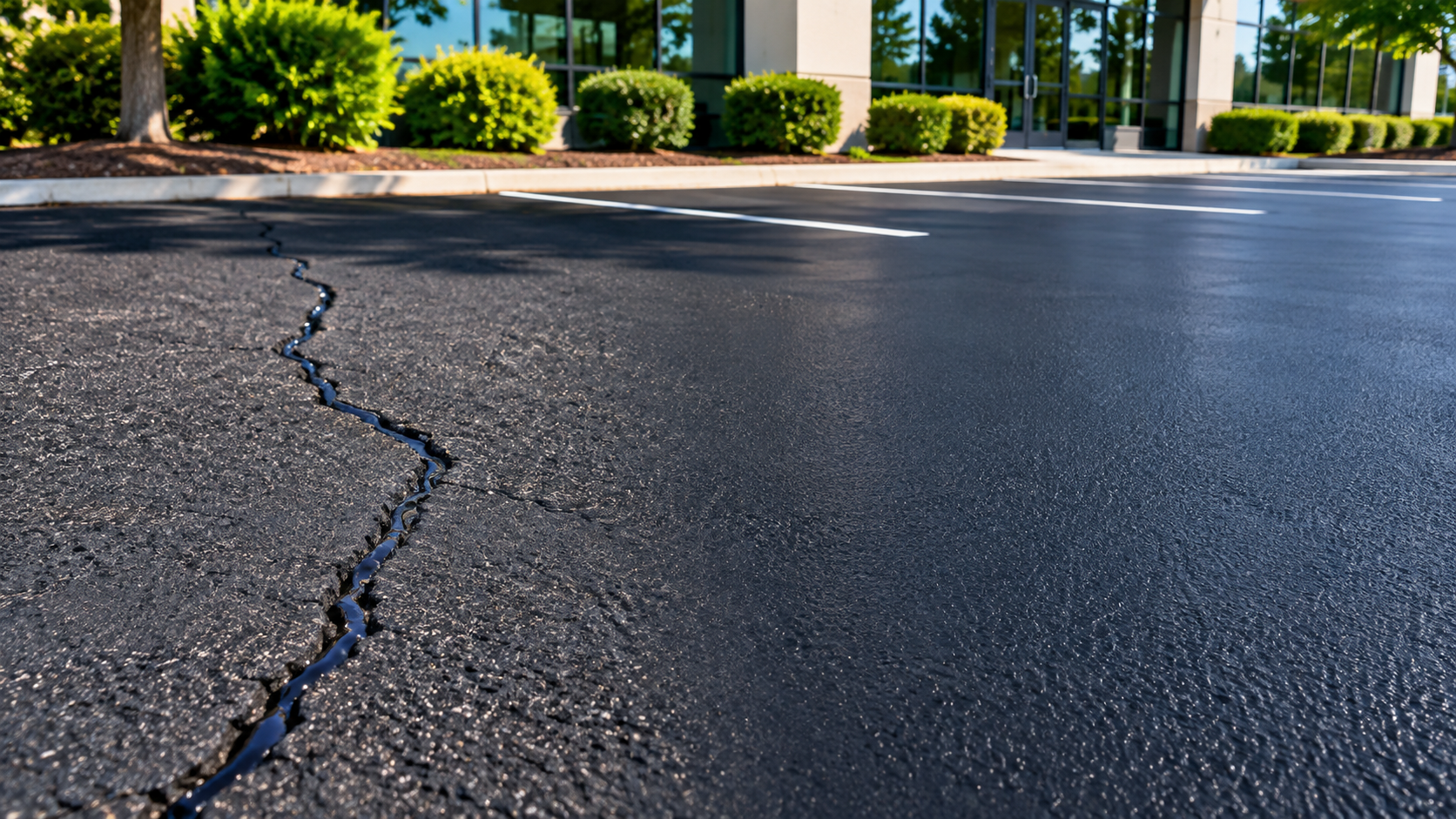
Protecting your commercial asphalt pavement starts with understanding the right maintenance solutions.
Over time, parking lots, driveways, and other paved surfaces experience wear and tear from traffic, weather, UV exposure, and everyday use. Without proper maintenance, minor surface issues can develop into costly repairs and premature pavement deterioration.
Two of the most effective preventative maintenance treatments for asphalt pavement are crack sealing and sealcoating. While these services are often mentioned together, they serve different purposes in protecting and extending the life of your pavement.
At PaveConnect, we help commercial property owners and facility managers make informed pavement maintenance decisions. Understanding the difference between crack sealing and sealcoating can help you develop a proactive maintenance strategy that protects your investment and minimizes long-term costs.
What Is Crack Sealing?
Crack sealing is a preventative maintenance treatment designed to prevent water, debris, and other damaging materials from entering cracks in asphalt pavement.
As asphalt ages, temperature fluctuations, heavy traffic, and environmental exposure can cause cracks to form. Even small cracks can allow moisture to penetrate beneath the pavement surface, potentially weakening the underlying base and accelerating deterioration.
Crack sealing involves applying a specialized flexible sealant into suitable cracks to create a protective barrier against moisture intrusion.
Benefits of Crack Sealing
Prevents Water Intrusion: Helps keep rainwater and moisture from penetrating the pavement’s underlying layers.
Reduces Further Deterioration: Limits the potential for cracks to expand and contribute to potholes or structural damage.
Extends Pavement Life: Protects the existing asphalt and helps delay the need for more extensive repairs.
Minimizes Repair Costs: Addresses minor pavement issues before they develop into larger, more expensive problems.
Supports Year-Round Protection: Flexible sealing materials can accommodate normal pavement movement caused by temperature changes.
When Is Crack Sealing Necessary?
Crack sealing is most effective when cracks are identified early, before significant structural damage occurs.
Common signs that your pavement may benefit from crack sealing include:
Visible longitudinal or transverse cracks
Cracks caused by seasonal temperature fluctuations
Early signs of water penetration
Isolated cracks in otherwise structurally sound asphalt
Cracks that are beginning to widen or collect debris
Important: Not every crack can be resolved with crack sealing. Extensive alligator cracking, severe pavement movement, and significant base failures may require asphalt patching, rehabilitation, or replacement.
Addressing suitable cracks early can help prevent moisture-related damage and preserve the overall condition of your pavement.
What Is Sealcoating?
Sealcoating is a protective treatment applied to the surface of existing asphalt pavement. Unlike crack sealing, which targets individual cracks, sealcoating creates a protective surface layer designed to reduce the effects of everyday exposure.
Over time, sunlight, oxidation, water, and vehicle fluids can cause asphalt to become brittle, faded, and more vulnerable to deterioration. Sealcoating helps slow surface aging while restoring a uniform, dark appearance.
The process typically involves cleaning and preparing the asphalt surface before applying a specialized sealcoat material.
Benefits of Sealcoating
Protects Against UV Exposure: Helps reduce the effects of sunlight and oxidation that can cause asphalt to dry out and become brittle.
Improves Water Resistance: Creates a protective surface barrier that helps reduce moisture penetration.
Reduces Surface Wear: Helps protect asphalt from routine environmental exposure and certain vehicle fluids.
Enhances Curb Appeal: Restores a clean, dark appearance that improves the overall presentation of commercial properties.
Supports Long-Term Maintenance: Helps preserve pavement condition and may delay more expensive rehabilitation when applied at appropriate intervals.
When Is Sealcoating Necessary?
Sealcoating is generally recommended for asphalt pavement that remains structurally sound but is beginning to show signs of surface aging.
Common indicators include:
Fading asphalt that has changed from dark black to gray
Minor surface oxidation or weathering
Pavement exposed to frequent sunlight and traffic
Asphalt that has not received protective maintenance in several years
Commercial parking lots that need improved appearance and surface protection
Many commercial properties evaluate sealcoating approximately every 2–3 years, depending on pavement condition, traffic volume, climate, and the type of sealcoat used. However, the appropriate schedule should be based on a professional pavement assessment rather than a fixed timeline.
Sealcoating is not intended to repair structural damage, fill significant cracks, or correct drainage problems. Existing pavement defects should be addressed before the treatment is applied.
Crack Sealing vs. Sealcoating: Key Differences
Although both treatments support preventative asphalt maintenance, their primary functions are different.
| Feature | Crack Sealing | Sealcoating |
|---|---|---|
| Primary Purpose | Seals individual cracks | Protects the asphalt surface |
| Main Benefit | Limits water intrusion through cracks | Slows surface oxidation and weathering |
| Application | Applied directly to suitable cracks | Applied across the pavement surface |
| Best Used For | Early-stage cracking | Structurally sound, aging asphalt |
| Appearance | Treats visible cracks | Restores a uniform dark finish |
| Maintenance Role | Helps prevent localized deterioration | Helps preserve overall surface condition |
The key difference: Crack sealing addresses openings in the pavement, while sealcoating protects the asphalt surface from environmental wear.
Both treatments can play important roles in a comprehensive pavement maintenance program.
Why Crack Sealing and Sealcoating Work Better Together
While crack sealing and sealcoating serve different purposes, combining them as part of a proactive maintenance plan can provide more complete pavement protection.
For example, applying sealcoating over pavement with untreated cracks does not eliminate the risk of water entering those openings. Similarly, sealing individual cracks without addressing widespread surface oxidation leaves the surrounding asphalt exposed to continued aging.
A comprehensive pavement maintenance approach typically follows these steps:
1. Inspect the Pavement
Begin with a professional assessment to identify cracks, surface wear, drainage issues, potholes, and other signs of deterioration.
2. Address Existing Damage
Complete necessary asphalt repairs, including crack sealing, patching, or localized pavement rehabilitation, before applying protective surface treatments.
3. Apply Sealcoating When Appropriate
Once the pavement is properly prepared and suitable for treatment, sealcoating can help protect the surface from oxidation, moisture, and environmental exposure.
4. Establish a Routine Maintenance Schedule
Regular inspections and preventative treatments help identify developing problems early and maintain consistent pavement performance.
By addressing both localized cracks and overall surface deterioration, property owners can reduce the risk of avoidable damage and maximize the value of their asphalt investment.
The Cost of Delaying Asphalt Maintenance
One of the most common mistakes commercial property owners make is waiting until pavement damage becomes severe before scheduling maintenance.
Small cracks may seem insignificant, but they can allow water to enter the pavement structure. As moisture penetrates and traffic continues to stress the surface, minor damage can progress into potholes, weakened pavement, and more extensive deterioration.
Likewise, untreated asphalt surfaces can become increasingly vulnerable to oxidation and environmental wear, eventually requiring more substantial repairs.
Delaying preventative maintenance can lead to:
Increased asphalt repair and replacement costs
More extensive cracking and pothole formation
Reduced pavement performance and service life
Potential trip hazards and vehicle damage
Disruptions to parking lot accessibility and daily operations
A less professional appearance for commercial properties
Preventative maintenance is generally more cost-effective than waiting for major pavement failures. Investing in timely crack sealing, sealcoating, and routine inspections can help property owners better manage maintenance budgets and avoid unnecessary expenses.
How Often Should Commercial Asphalt Be Maintained?
Every commercial property has different pavement maintenance needs. Factors such as traffic volume, vehicle weight, climate, drainage, and pavement age all influence how frequently treatments may be required.
For example, a retail parking lot with constant vehicle traffic may experience different wear patterns than an industrial facility that regularly accommodates heavy trucks and equipment.
A proactive maintenance program should include regular pavement inspections, prompt attention to developing cracks, and periodic evaluation of the need for sealcoating.
Working with an experienced paving provider can help ensure maintenance treatments are performed at the appropriate time and that underlying issues are addressed before they become more expensive.
Protect Your Pavement Investment with PaveConnect
Your commercial pavement is an important investment that affects property appearance, accessibility, safety, and daily operations. Keeping it in good condition requires more than responding to damage after it occurs.
At PaveConnect, we provide nationwide commercial paving and pavement maintenance solutions designed to help property owners and facility managers protect their asphalt surfaces and plan for long-term performance.
From crack sealing and sealcoating to asphalt repairs, parking lot maintenance, and larger paving projects, our team helps businesses develop practical solutions tailored to their facilities.
Don’t wait for small pavement problems to become costly repairs.
📲 Contact PaveConnect today to learn more about our commercial asphalt maintenance services and how a proactive pavement management strategy can help extend the life of your investment.
